Course Offerings
Undergraduate Courses
ECE 355
Electromechanical Energy Conversion
Energy storage and conversion, force and emf production, coupled circuit analysis of systems with both electrical and mechanical inputs. Applications to electric motors and generators and other electromechanical transducers.
ECE 304
Electric Machines Lab
Terminal characteristics of electric machines, elements of speed control, voltage regulation, and applications in systems. Emphasis on the experimental approach to the solution of complex physical problems.
ME 376
Introduction to Mechatronics
DC and AC circuit analysis and design, stressing tools to understand sensors/actuators; design of active and passive linear circuits for signal conditioning; digital circuits, Boolean logic, programming, as needed for e.g. embedded microcontrollers. Laboratory exercises.
Undergraduate Electives / Graduate Courses
ECE 411
Electric Drives
Basic concepts of electric drive systems. Emphasis on system analysis and application. Topics include: dc machine control, variable frequency operation of induction and synchronous machines, unbalanced operation, scaling laws, adjustable speed drives, adjustable torque drives, coupled circuit modeling of ac machines.
ECE 412
Power Electronic Circuits
Operating characteristics of power semiconductor devices such as Bipolar Junction Transistors, IGBTs, MOSFETs and Thyristors. Fundamentals of power converter circuits including dc/dc converters, phase controlled ac/dc rectifiers and dc/ac inverters. Practical issues in the design and operation of converters.
ECE 504
Electric Machine & Drive System Lab
Steady state and dynamic performance of electric machines in combination with power electronic converters. Parameter measurement, performance evaluation, design of experimental procedures for problem solving, use of digital data acquisition systems and signal processing equipment in system evaluation.
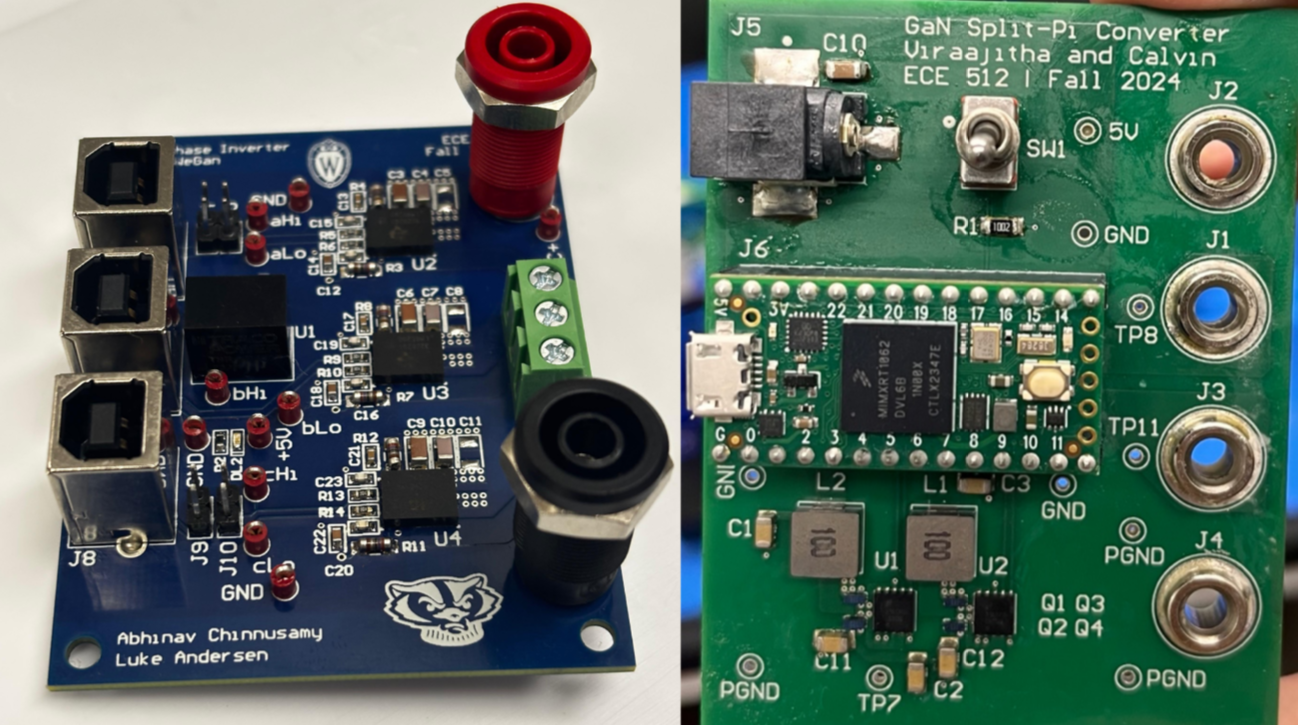
ECE 512
Power Electronics Lab
This laboratory introduces the student to measurement and simulation of important operating characteristics of power electronic circuits and power semiconductor devices. Emphasis is on devices, circuits, gating methods and power quality.
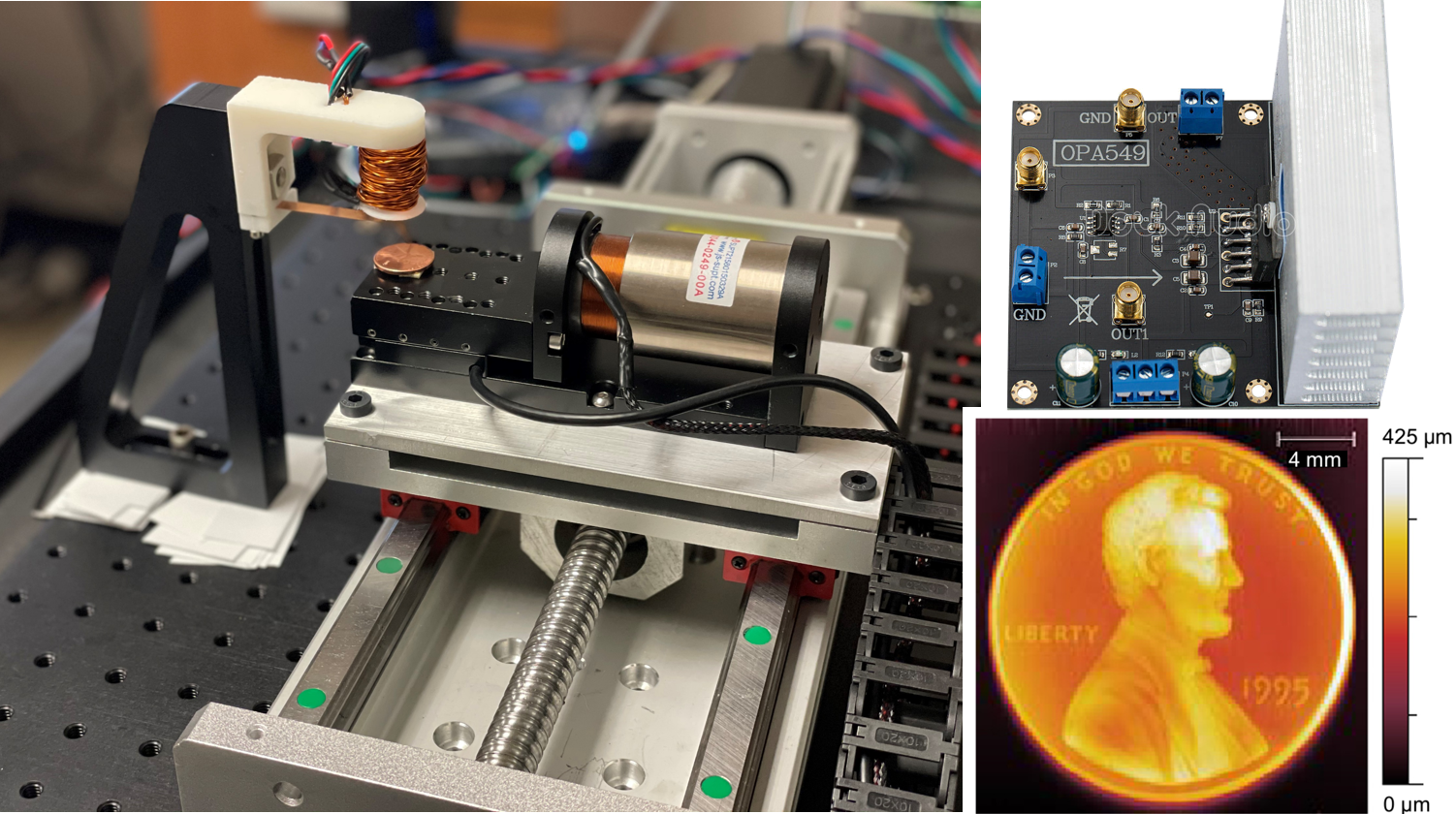
ECE/ME 577
Motion Controls Lab
Laboratory-based design, analysis, and implementation of control of mechatronic elements and systems. Integration of the mechanical and electrical engineering disciplines within a unified framework. Lab system: macro-scale atomic force microscope.
Graduate Courses
ECE 711
Dynamics and Control of AC Drives
Principles of power converters, two axis models of AC machines and AC drives, simulation of drive systems, analytical modeling of drives, dynamic behavior of induction and synchronous motors and drive systems. Knowledge of MATLAB/Simulink required.
ECE 712
Solid State Power Conversion
Advanced course in power electronics which provides an understanding of switching power converters. Included are DC-to-DC, AC-to-DC, DC-to-AC, and AC-to-AC converters, commutation techniques, converter control, interfacing converters with real sources and loads.
ECE 713
Electromagnetic Machine Design
Electromagnetic design concepts and application to AC machines, magnetic circuit concepts, calculation of equivalent circuit parameters of induction, synchronous and permanent magnet machines from geometric data, copper and iron loss calculations, theory and application of finite elements to electromagnetic devices.
ECE 714
Utility Application of Power Electronics
Power electronic application to utility systems is a rapidly growing field with major impact on the industry. Covers material on HVDC transmission, energy storage systems, renewable sources, static compensators, and flexible ac transmission systems.
ECE/ME 746
Dynamics of Controlled Systems
Emphasis on obtaining equations which define the behavior of physical systems frequently subjected to control; mechanical processing, fluid power, and thermal systems; analytical, experimental, and computer techniques.
ECE/ME 747
Advanced Computer Control of Machines and Processes
Digital control theory, design methodology, and techniques for controller implementation on digital computers. Advanced single and multi-axis motion generation algorithms. Multiple processor control systems. Multiple objective control systems for machinery guidance and manufacturing processes. Precision control.
Short Courses
In addition to the for-credit courses listed above, WEMPEC faculty and affiliates are involved in several Short Courses offered by Interdisciplinary Professional Programs as continuing education for individuals in industry.